
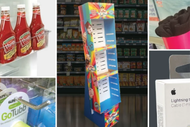
In an era increasingly dominated by artificial intelligence, predictive analytics, and automated retail systems, one might assume that traditional in-store merchandising tools are losing relevance. However, the opposite is proving true. Clip strip point-of-purchase (POP) displays—simple, cost-effective merchandising tools—are experiencing a resurgence as powerful revenue drivers when strategically integrated into modern retail environments.
At their core, clip strips are designed to maximize unused vertical and transitional spaces within stores. Positioned along aisles, endcaps, or near checkout counters, they capitalize on high-traffic zones where purchasing decisions are often impulsive. While AI can predict consumer behavior and optimize inventory, it cannot replace the psychological triggers activated by physical product visibility and accessibility. Clip strips bridge this gap, converting data-driven insights into tangible, revenue-generating placements.
Artificial intelligence excels at identifying purchasing patterns—what customers buy together, when they buy, and how frequently. Retailers leveraging AI can use this data to curate highly targeted clip strip assortments. For instance, if data reveals that customers purchasing pasta frequently buy grated cheese or seasoning packets, these complementary items can be cross-merchandised on clip strips adjacent to pasta shelves. This fusion of AI intelligence with physical merchandising creates a seamless path from insight to action, increasing average transaction value.
Moreover, clip strips enhance the concept of micro-merchandising—delivering the right product, in the right place, at the right moment. In a time when consumers are overwhelmed by choices, simplifying decision-making is critical. Clip strips act as curated suggestions, subtly guiding shoppers toward add-on purchases without requiring additional cognitive effort. This is particularly effective in convenience-driven environments where speed and ease are paramount.
Another advantage lies in their agility. Unlike large fixtures or digital installations, clip strips can be deployed, adjusted, and replaced quickly with minimal cost. This makes them an ideal tool for testing AI-generated merchandising strategies in real time. Retailers can experiment with different product combinations, pricing strategies, and placements, then refine their approach based on sales performance and data feedback loops.
From a financial perspective, the return on investment is compelling. Clip strips require minimal capital expenditure yet consistently contribute to incremental sales. They are especially valuable for promoting high-margin, small-sized items that benefit from increased visibility. In an AI-driven retail strategy, where efficiency and profitability are paramount, such low-cost, high-impact tools become indispensable.
Importantly, clip strips also support omnichannel alignment. As retailers integrate online and offline experiences, maintaining consistent product visibility across touchpoints is essential. Items featured in digital recommendations can be mirrored in-store via clip strips, reinforcing brand messaging and increasing conversion rates. This creates a cohesive customer journey that blends digital precision with physical engagement.
In conclusion, while artificial intelligence is transforming retail at an unprecedented pace, it does not diminish the value of physical merchandising—it enhances it. Clip strip POP displays exemplify how traditional tools can evolve alongside advanced technologies. By combining AI-driven insights with strategic in-store execution, retailers can unlock new revenue opportunities, improve customer experience, and remain competitive in an increasingly intelligent marketplace.