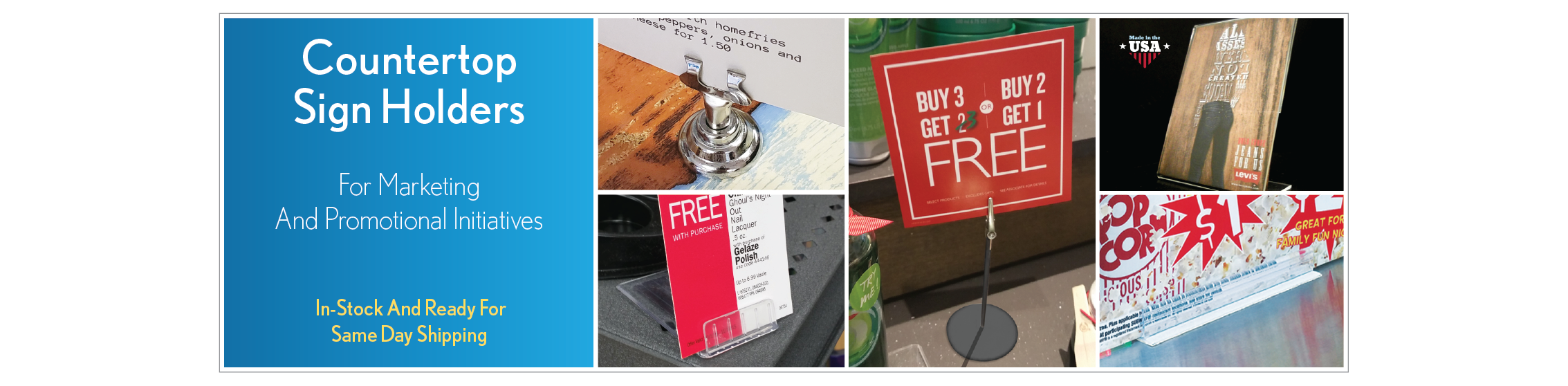
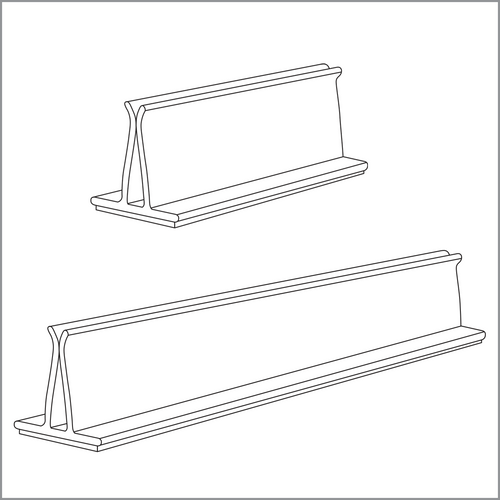
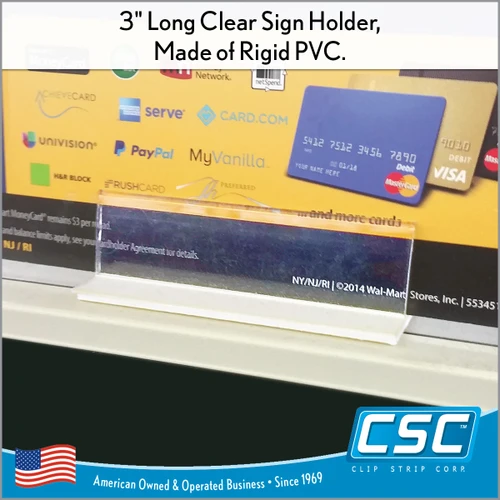
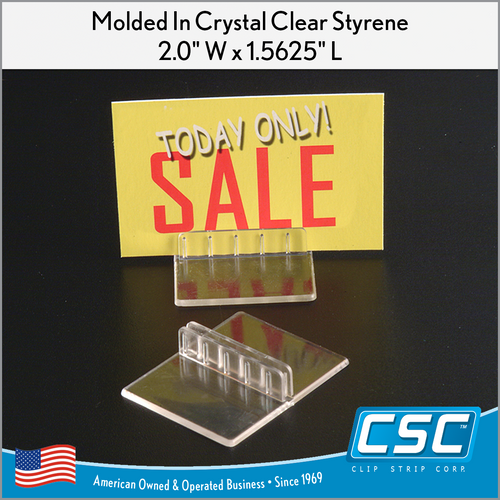
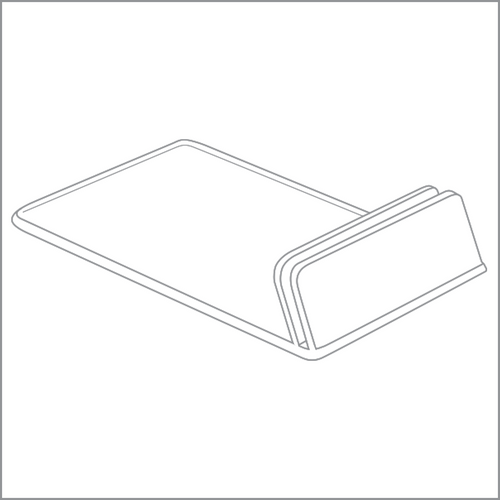
The best countertop sign holder depends on several factors, including the size of your sign, how often graphics will be changed, the viewing angle, the type of display surface, and the retail environment.
When selecting a countertop sign holder, consider:
- The dimensions and thickness of your sign
- Whether the sign will be viewed from one side or both sides
- Whether you need portrait or landscape orientation
- If the sign needs to be adjustable or fixed
- Whether the holder should be freestanding or mounted with adhesive
- The material of the holder, such as acrylic, PVC, plastic, or metal
- The overall appearance you want to achieve
For example, acrylic sign holders provide a clean, upscale presentation for permanent displays, while adhesive-backed sign holders are ideal when signage needs to be attached directly to counters, fixtures, or product displays. Adjustable sign holders offer flexibility when the viewing height or angle needs to change, and brochure holders are perfect when printed literature needs to accompany the sign.
With decades of point-of-purchase merchandising experience, Clip Strip Corp can help you select the countertop sign holder that best fits your display, signage, and merchandising objectives.
Can countertop sign holders be customized?
Yes. Many countertop sign holders can be customized to fit your signage, branding, display surface, and merchandising goals. Custom options may include different sizes, materials, colors, mounting styles, viewing angles, and sign orientations.
Depending on the application, countertop sign holders can be designed to hold printed signs, product information, pricing, QR codes, promotional graphics, menus, brochures, literature, or branded messages. Customization is especially useful for retailers, restaurants, banks, hotels, trade shows, medical offices, and consumer packaged goods brands that want signage to match a specific promotion, brand identity, or retail environment.
Clip Strip Corp can help recommend the best countertop sign holder based on your sign dimensions, display location, expected usage, and overall merchandising objectives.
What materials are countertop sign holders made from?
Countertop sign holders are commonly made from acrylic, PVC, plastic, metal, wire, or other durable display materials. The best material depends on the look, durability, flexibility, and application required.
Acrylic sign holders are popular for clean, professional displays and are often used in retail stores, offices, hotels, restaurants, banks, and showrooms. Plastic and PVC sign holders are lightweight, practical, and cost-effective for many point-of-purchase displays. Metal or wire sign holders may be preferred when extra strength, stability, or a specific design appearance is needed.
The right material depends on where the sign holder will be used, how often the signage will be changed, and whether the display needs to be temporary, semi-permanent, or reusable.
What size countertop sign holder do I need?
The right countertop sign holder size depends on the size of the printed sign, the amount of information being displayed, the available counter space, and how far away customers need to read the message.
Common countertop sign holder sizes include small holders for pricing cards, QR codes, and product callouts, as well as larger holders for menus, promotional signs, feature-and-benefit graphics, and brand messaging.
When choosing a size, the sign should be large enough to be noticed and read easily, but not so large that it blocks products, interrupts the checkout area, or creates clutter. For busy retail counters, compact signs with clear messaging often perform better than oversized signs with too much text.
Clip Strip Corp can help match your sign size, orientation, and display environment with the proper countertop sign holder.
Are countertop sign holders reusable?
Yes. Most countertop sign holders are reusable, especially those made from durable materials such as acrylic, plastic, PVC, metal, or wire. They are designed so printed signs, pricing cards, menus, promotional messages, or product information can be changed as needed.
Reusable countertop sign holders are a cost-effective option for retailers and businesses that frequently update promotions, pricing, seasonal messages, or product information. Instead of replacing the entire display, the printed insert can usually be removed and replaced.
The reusability of a sign holder depends on its material, construction, retail environment, and how it is handled. For long-term or frequently updated programs, a more durable sign holder is usually the better choice.
What is the difference between acrylic, PVC, plastic, and metal countertop sign holders?
The main difference is appearance, durability, flexibility, and cost.
Acrylic countertop sign holders provide a clean, clear, upscale look and are commonly used when presentation matters. They are popular in retail stores, restaurants, banks, hotels, offices, showrooms, and reception areas.
PVC and plastic sign holders are lightweight, versatile, and cost-effective. They are often used for point-of-purchase displays, product promotions, temporary signage, and high-volume retail programs.
Metal countertop sign holders are typically stronger and more durable. They may be used when a sturdier display is needed or when the sign holder is part of a longer-term merchandising program.
The best choice depends on your sign size, display location, budget, brand image, and how often the signage will be changed.
Where should countertop signs be placed for maximum visibility?
Countertop signs should be placed where customers naturally stop, look, or make a decision. Common high-visibility locations include checkout counters, service desks, reception areas, product demonstration areas, sampling stations, display tables, restaurant counters, trade show booths, and near featured products.
For retail stores, countertop signs are especially effective near the point of purchase because customers are already prepared to buy. Signs placed near checkout can promote add-on items, loyalty programs, QR codes, special offers, seasonal products, or impulse purchases.
The best countertop sign placement should be easy to see, easy to read, and should not block products, payment areas, employees, or customer movement. Clear messaging, proper height, and the right viewing angle all help improve sign visibility and customer engagement.
Can countertop sign holders hold brochures and literature?
Yes. Some countertop sign holders are designed specifically to hold brochures, pamphlets, flyers, sell sheets, menus, product literature, or other printed materials. These are often called brochure holders, literature holders, flyer holders, or combination sign and brochure holders.
Countertop literature holders are commonly used in retail stores, banks, hotels, medical offices, real estate offices, trade shows, restaurants, schools, and service businesses. They allow customers to take printed information with them while also keeping the counter area neat and organized.
Combination countertop displays can hold both a sign and printed literature, making them useful for promotions, product launches, informational campaigns, and lead-generation programs.
How do countertop sign holders increase retail sales?
Countertop sign holders help increase retail sales by placing important messages directly where customers are making decisions. At checkout counters, service desks, display tables, and product areas, signs can draw attention to promotions, add-on products, limited-time offers, QR codes, loyalty programs, and product benefits.
A well-placed countertop sign can remind customers about items they may have forgotten, encourage impulse purchases, explain product features, promote higher-margin items, or direct shoppers to additional products and services.
Countertop sign holders are effective because they make the message easy to see and keep the display organized and professional. When used correctly, they help retailers communicate clearly, improve the shopping experience, and increase the chances that a customer will take action before leaving the store.