
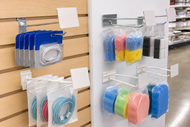
In a competitive retail environment, even a well-designed product can be overlooked when it is poorly positioned. Shoppers move quickly, shelves compete for attention, and valuable selling space is often limited. Metal and plastic display hook systems provide retailers with a practical way to overcome these challenges by placing merchandise where it can be clearly seen, easily reached, and conveniently purchased.
Display hooks are widely used to suspend packaged merchandise from pegboards, slatwalls, power panels, corrugated displays, price channels, and other vertical fixtures. By moving products away from crowded shelves and into a shopper’s direct line of sight, these systems transform ordinary store surfaces into productive point-of-purchase merchandising areas.
Their greatest strength is visibility. Products displayed on hooks are presented individually rather than stacked behind one another or placed inside containers. Customers can quickly recognize the item, review its packaging, compare options, and remove it without disturbing the rest of the display. This creates a cleaner presentation while making the purchasing process easier and more efficient.
Display hook systems also help retailers maximize available space. Walls, shelf edges, endcaps, temporary displays, and narrow areas between established product categories can all become additional selling locations. Retailers can use these spaces to introduce complementary products, promote seasonal merchandise, highlight new items, or encourage impulse purchases.
For example, charging cables may be placed near mobile accessories, small tools beside related hardware, or travel-size products near checkout counters. These placements connect the displayed item with an immediate customer need, making the purchase feel relevant rather than random.
The choice between metal and plastic hooks depends on the merchandise, fixture, and expected level of use. Metal display hooks are generally suited to heavier products, permanent displays, and high-traffic retail environments where strength and durability are priorities. They offer a professional appearance and can support repeated stocking and customer handling.
Plastic hooks are lightweight, adaptable, and particularly useful for temporary promotions, corrugated displays, and lighter packaged goods. They can provide an economical solution for short-term campaigns, product launches, or frequently changing merchandising programs. Because plastic components are easy to handle, retailers can assemble, relocate, and update displays with minimal disruption.
Modern hook systems can also support clearer product communication. Scan plates and label holders allow retailers to display prices, barcodes, product descriptions, promotional messages, and inventory information directly beside the merchandise. This helps customers make faster decisions while supporting more organized store operations.
Security accessories can further strengthen the display by helping protect higher-value merchandise without completely removing it from customer view. This creates a balance between product accessibility and loss prevention.
Effective point-of-purchase merchandising is not simply about filling available space. It is about presenting the right product in the right location at the right moment. Metal and plastic display hook systems accomplish this through visibility, flexibility, organization, and convenience.
For retailers and brands seeking to improve product exposure, maximize vertical space, and create more responsive in-store displays, hook systems offer a powerful and scalable merchandising solution. A small display component can ultimately make a significant difference in how products are noticed, evaluated, and purchased.