
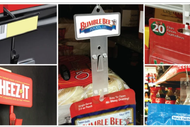
In the competitive landscape of retail, where attention spans are fleeting and purchase decisions are often made in seconds, point-of-purchase (POP) displays have become a critical tool for influencing consumer behavior. Among these, clip strip displays stand out as a deceptively simple yet highly effective merchandising solution. Positioned strategically along aisles, shelves, or checkout areas, clip strips capitalize on visibility, convenience, and psychology to drive impulse purchases and increase basket size.
Clip Strips are vertical merchandising tools designed to hold multiple lightweight products in a compact, hanging format. Their true value lies not in their structure, but in their placement. By attaching directly to shelving or high-traffic zones, they intercept customers mid-journey—precisely at the moment when they are most susceptible to unplanned buying decisions. Unlike traditional shelf displays that rely on intentional browsing, clip strips introduce products in a disruptive yet seamless way, inserting additional purchase opportunities into the shopper’s path.
From a behavioral standpoint, impulse buying is heavily influenced by immediacy and perceived convenience. Clip strips excel in both areas. When a complementary product is placed adjacent to a primary item—such as batteries next to electronics or seasoning packets near fresh produce—it reduces the cognitive effort required for the shopper to make a connection. This technique, known as cross-merchandising, subtly suggests need without overt selling, making the decision feel organic rather than forced.
Moreover, clip strips leverage the principle of visual interruption. In an environment where shelves are often uniform and predictable, a vertical strip of products creates contrast, drawing the eye naturally. This visual differentiation is crucial in crowded retail spaces, where standing out can mean the difference between a sale and a missed opportunity. The accessibility of clip strip items—typically placed at eye or hand level—further enhances engagement, removing barriers between the product and the consumer.
Another key advantage is their ability to maximize underutilized retail space. Clip strips transform overlooked areas—such as shelf edges, aisle ends, or checkout lines—into revenue-generating zones. This is particularly valuable for retailers aiming to optimize every square inch of their store without investing in large, permanent fixtures. For brands, this means increased exposure in locations where traditional shelf space may be limited or highly competitive.
From a cost-efficiency perspective, clip strips offer a high return on investment. They are inexpensive to produce, easy to install, and require minimal maintenance. Yet, their impact on sales can be significant, especially when paired with the right product mix and placement strategy. Seasonal items, promotional goods, and low-cost add-ons perform exceptionally well on clip strips, as they align with the spontaneous nature of impulse buying.
In today’s retail environment, where data-driven strategies often dominate decision-making, it is important not to overlook the power of simple, well-executed merchandising tools. Clip strip POP displays prove that influencing consumer behavior does not always require complex technology—sometimes, it is about being in the right place at the right time.
Ultimately, clip strips serve as a silent sales driver, bridging the gap between intention and action. By enhancing visibility, encouraging product discovery, and simplifying decision-making, they play a pivotal role in converting passive shoppers into active buyers.